

Supreme Court Upholds Birthright Citizenship in Major Setback for Trump
By Eric Thompson | MAGATV
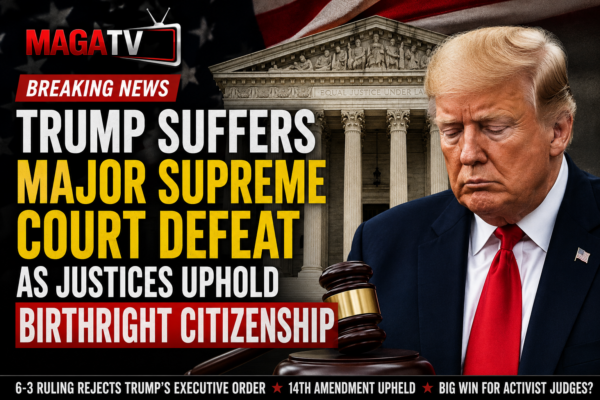
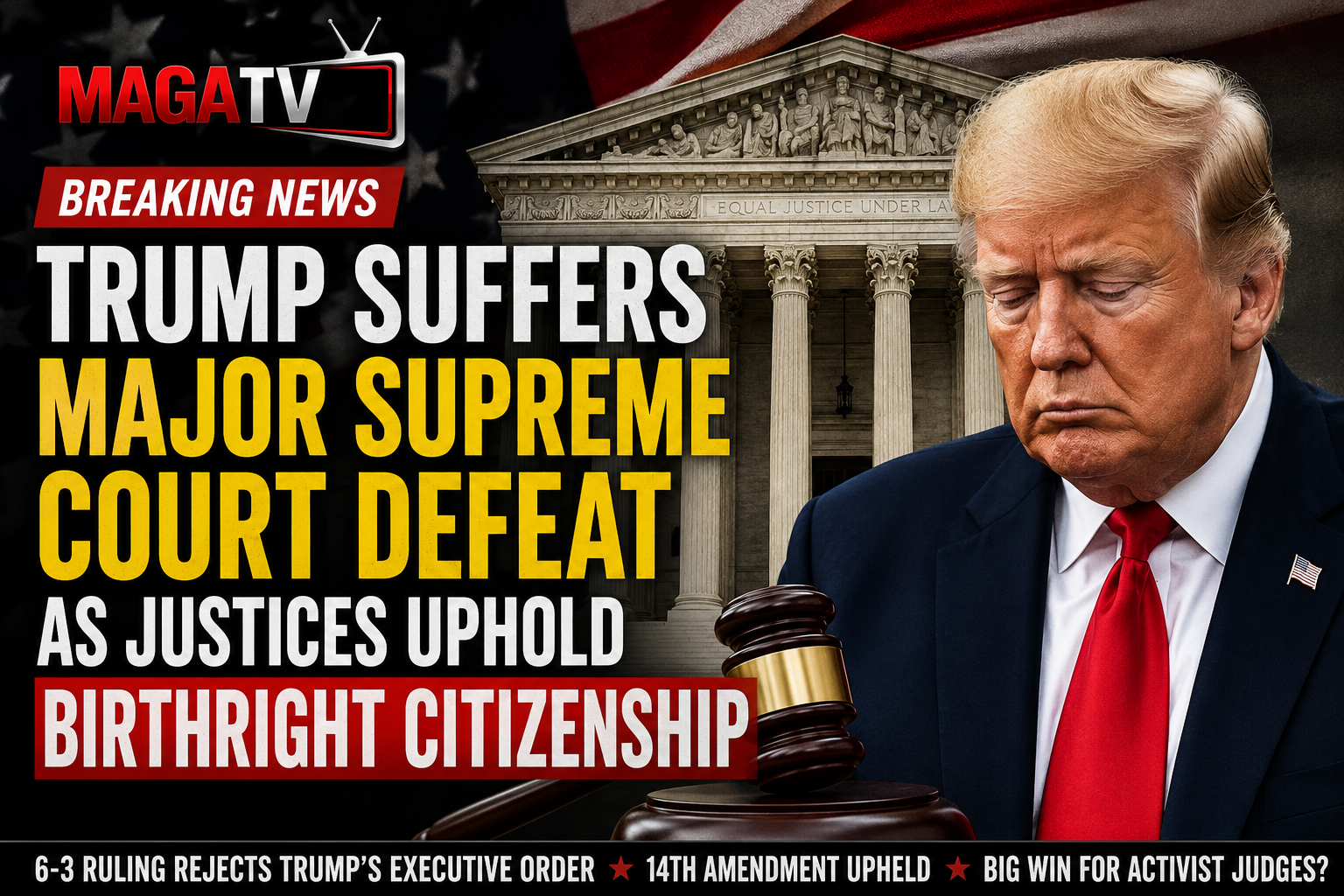
President Donald Trump suffered one of the most significant legal defeats of his second term Tuesday after the U.S. Supreme Court ruled 6-3 that the Constitution guarantees birthright citizenship to nearly all children born on American soil, rejecting his administration’s effort to narrow the scope of the 14th Amendment.
The ruling strikes down Trump’s executive order that sought to deny automatic citizenship to children born in the United States whose parents were either in the country illegally or were present only temporarily on visas. Chief Justice John Roberts authored the majority opinion, joined by Justices Sonia Sotomayor, Elena Kagan, Ketanji Brown Jackson, and Amy Coney Barrett, while Justice Brett Kavanaugh agreed with the judgment on narrower legal grounds. Justices Clarence Thomas, Samuel Alito, and Neil Gorsuch dissented.

For Trump, the decision represents a major setback to one of the signature immigration initiatives of his presidency. Since returning to office, he has argued that birthright citizenship has encouraged illegal immigration and fueled so-called “birth tourism,” where foreign nationals travel to the United States specifically so their children will automatically become American citizens.
The administration maintained that the phrase “subject to the jurisdiction thereof” in the 14th Amendment should not automatically apply to children whose parents lack permanent legal status. Government attorneys argued the amendment was originally intended to guarantee citizenship primarily for formerly enslaved Americans following the Civil War, not to establish unrestricted citizenship for every child born within U.S. borders.
The Supreme Court rejected that interpretation.
Writing for the majority, Roberts relied heavily on the Court’s landmark 1898 decision in United States v. Wong Kim Ark, which has long been understood to establish that nearly everyone born in the United States is an American citizen regardless of the immigration status of their parents. The majority concluded that changing such a foundational constitutional principle cannot be accomplished through executive action.
Justice Thomas authored an extensive dissent, arguing that the Court has stretched the Citizenship Clause beyond its original meaning. Thomas contended that “jurisdiction” historically implied complete political allegiance to the United States rather than mere physical presence within its borders. Justice Alito likewise warned that the ruling will continue encouraging illegal immigration and perpetuate incentives that Congress, not the judiciary, should address.
President Trump responded quickly following the decision, criticizing the ruling while signaling that his administration would continue pursuing immigration reforms through Congress and other executive actions. He has previously argued that ending automatic citizenship for children born to illegal immigrants would reduce incentives for unlawful border crossings and help restore the original intent of the Constitution.
Supporters of the ruling hailed it as a victory for constitutional stability, while immigration restriction advocates warned it removes an important tool for addressing illegal immigration and leaves Congress with the responsibility of determining whether broader immigration reforms are necessary.
A Conservative Perspective
As both a conservative Christian and a Marine Corps veteran, I believe this decision highlights an important distinction that many Americans often overlook.
The Supreme Court did not rule on whether current immigration policy is wise. It ruled on what it believes the Constitution presently requires.
Those are two different questions.
Reasonable Americans can strongly support secure borders, aggressive immigration enforcement, deportation of violent criminals, completion of the border wall, and an immigration system that prioritizes America’s national interests while simultaneously recognizing that constitutional amendments cannot simply be reinterpreted by executive order.
If conservatives believe birthright citizenship should be changed, the Constitution itself provides the lawful avenue: legislation where possible, constitutional amendment where necessary, and continued public debate—not unilateral executive action.
The Founders intentionally created a system of separated powers precisely because no president, regardless of party, possesses unlimited constitutional authority.
As Christians, Scripture reminds believers to pursue both justice and lawful order.
Romans 13 teaches that governing authorities exist under God’s sovereign authority, while Proverbs 21:1 reminds us that “The king’s heart is like channels of water in the hand of the Lord; He turns it wherever He wishes.” (NASB 1995)
Whether one agrees or disagrees with this decision, Christians should continue praying for our leaders, our courts, and our nation as America wrestles with difficult constitutional and immigration questions.
The debate over immigration is far from over. This ruling closes one legal avenue, but it almost certainly opens a new chapter in the broader national conversation about border security, citizenship, congressional authority, and the future of American immigration policy.