

Trump Warns Democrats Are Embracing ‘Godless Communism’
President says socialist movement threatens America’s cities, economy, and constitutional values
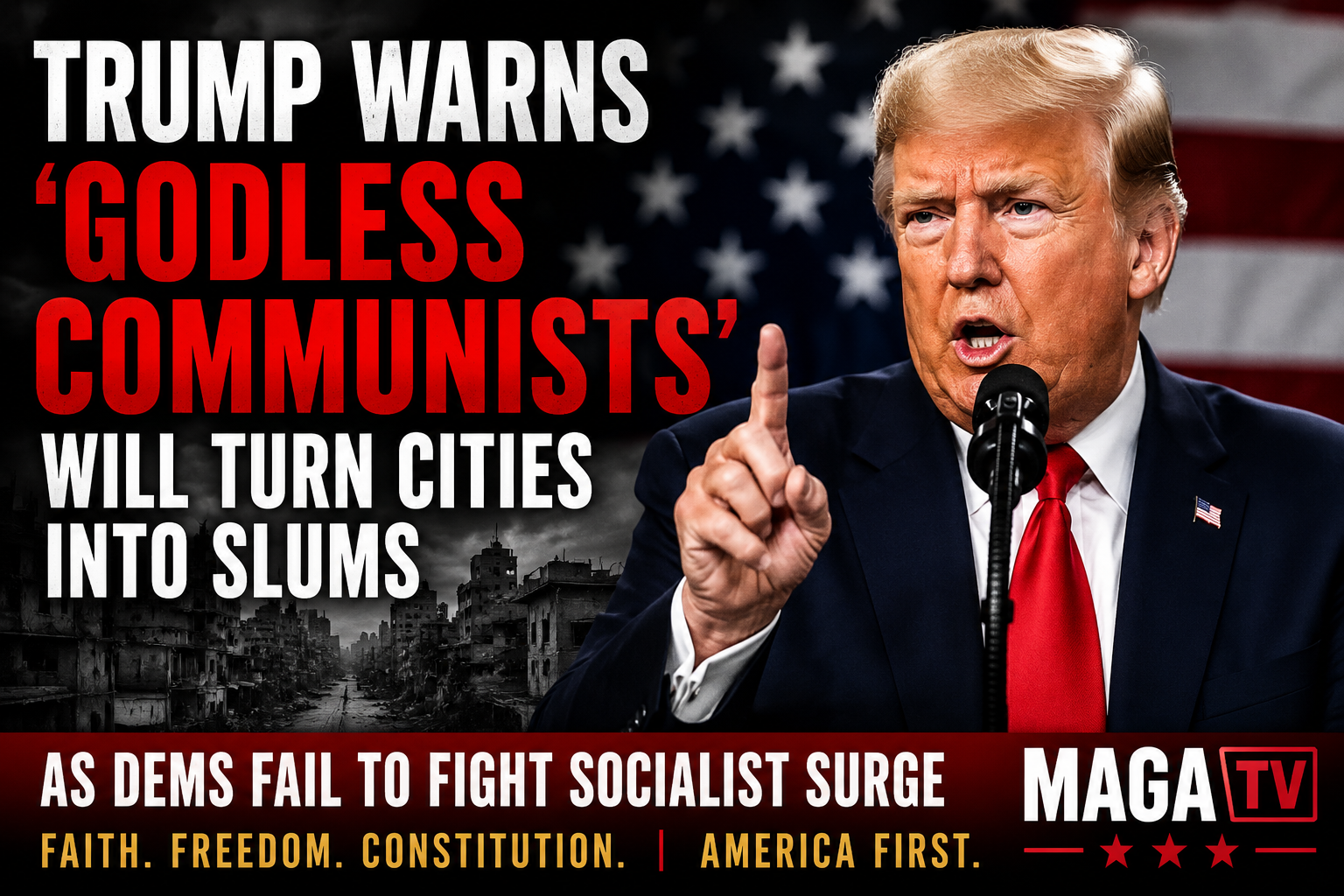
Former President Donald Trump delivered one of his sharpest warnings yet about the direction of the Democratic Party during remarks to the Faith & Freedom Coalition on Saturday, arguing that a growing socialist movement within the party represents what he called one of the greatest ideological threats facing the United States.
Watch President Trump’s Remarks
President Trump delivered these comments while speaking at the Faith & Freedom Coalition’s Road to Majority Conference. Watch the video below.
Speaking before a crowd of conservative activists, Trump accused Democratic leaders of failing to confront what he described as a surge of “godless communists” gaining influence within the party. He warned that if those ideas continue to spread, America’s major cities could face increasing economic decline, rising crime, and weakened constitutional freedoms.
Democrats Face Growing Socialist Revolt
The comments came as Republicans continue highlighting the victories of several Democratic Socialist-backed candidates in recent elections, particularly in New York City, where progressive candidates have received growing support among portions of the Democratic electorate.

“Our country cannot afford to allow these radical ideas to become the mainstream,” Trump told supporters, arguing that policies rooted in socialism ultimately weaken economic opportunity, discourage investment, and expand government control over everyday life.
The former president also connected his warning to broader concerns about religious liberty, arguing that communist governments throughout history have often restricted religious practice while expanding state authority.
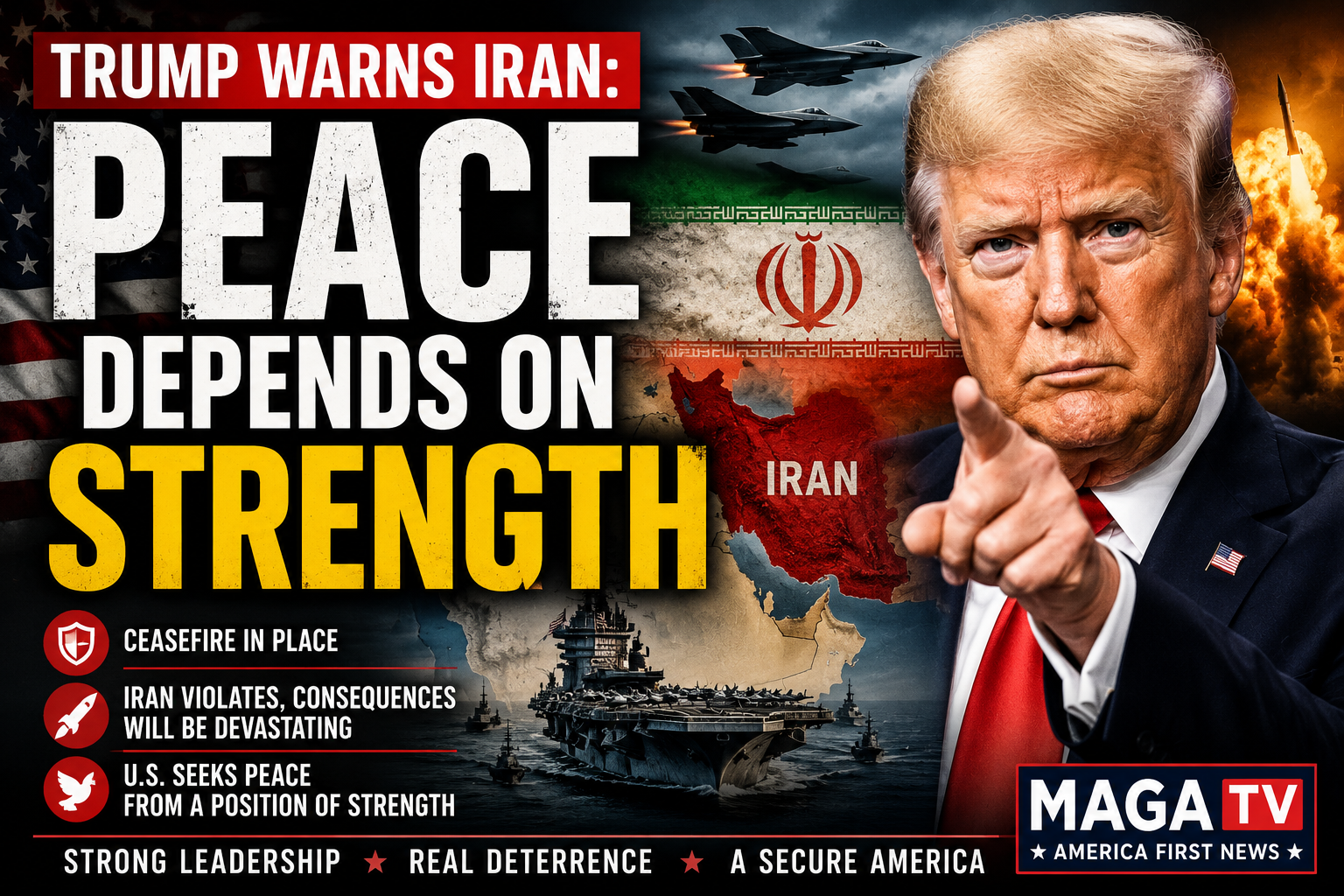
Trump Warns Iran: Peace Depends on Strength
A Growing Debate Inside the Democratic Party
Trump’s remarks arrive during an ongoing debate within Democratic politics over the role of progressive and democratic socialist candidates.
In recent years, members of the Democratic Socialists of America and other progressive organizations have gained visibility in local and national elections, advocating policies such as government-run healthcare, expanded social programs, higher taxes on wealthy Americans, rent controls, and increased government involvement in housing and labor markets.
Supporters argue these proposals address income inequality and make essential services more accessible. Critics contend they would expand federal power, increase spending, and discourage economic growth.
Republicans have increasingly sought to portray these developments as evidence that the Democratic Party is moving further left, while many Democratic leaders reject characterizations equating democratic socialism with communism.
Trump Links Economic Freedom and National Prosperity
Throughout his speech, Trump argued that America’s economic strength has historically been built on free enterprise, private property, entrepreneurship, and limited government.
He warned that abandoning those principles could have long-term consequences for cities already struggling with homelessness, crime, and population loss.
Trump cited urban decline as an example of what he believes occurs when government policies discourage business investment and reduce incentives for economic growth.
Supporters of the former president point to migration from several large cities to states with lower taxes and fewer regulations as evidence that many Americans continue seeking policies that prioritize economic freedom and public safety.
Religion and the Public Square
One of the central themes of Trump’s remarks focused on faith.
By describing the movement as “godless,” Trump argued that many socialist and communist governments throughout history have attempted to reduce or eliminate the influence of religion in public life.
Historians note that several twentieth-century communist governments—including those in the former Soviet Union, Maoist China, and other Marxist regimes—imposed significant restrictions on religious institutions and religious expression.
Trump suggested that protecting religious liberty remains closely connected to protecting broader constitutional freedoms, a message that resonated strongly with the Faith & Freedom Coalition audience.
Political Strategy Heading Toward the Midterms
Republican strategists increasingly view concerns over socialism as a defining campaign issue heading into the 2026 midterm elections.
Rather than focusing exclusively on personalities, many GOP candidates are expected to contrast their support for lower taxes, stronger border security, domestic energy production, and free-market economics against progressive proposals calling for expanded government programs.
Trump’s speech reinforced that strategy by framing the election as a broader contest between competing visions for America’s future rather than simply another partisan campaign.
Whether that message resonates with independent voters remains one of the major questions political observers will watch over the coming months.
Why It Matters
Trump’s remarks reflect more than campaign rhetoric—they highlight an increasingly important ideological debate taking place across the country.
Questions surrounding the proper size of government, economic freedom, religious liberty, and constitutional rights are expected to remain central themes throughout the upcoming election cycle.
As progressive voices continue gaining influence within portions of the Democratic Party, Republicans are likely to continue emphasizing the contrast between America First policies and proposals that expand federal authority.
For voters, the discussion ultimately extends beyond individual candidates.
It raises broader questions about the future direction of the nation, the role of government in everyday life, and the principles that have historically shaped the American experiment.
With the 2026 elections approaching, those debates are only expected to intensify.
What Happens Next
Republicans are expected to continue highlighting the ideological divide between the parties throughout the 2026 campaign season. MAGATV will continue following reactions from both parties as this story develops.